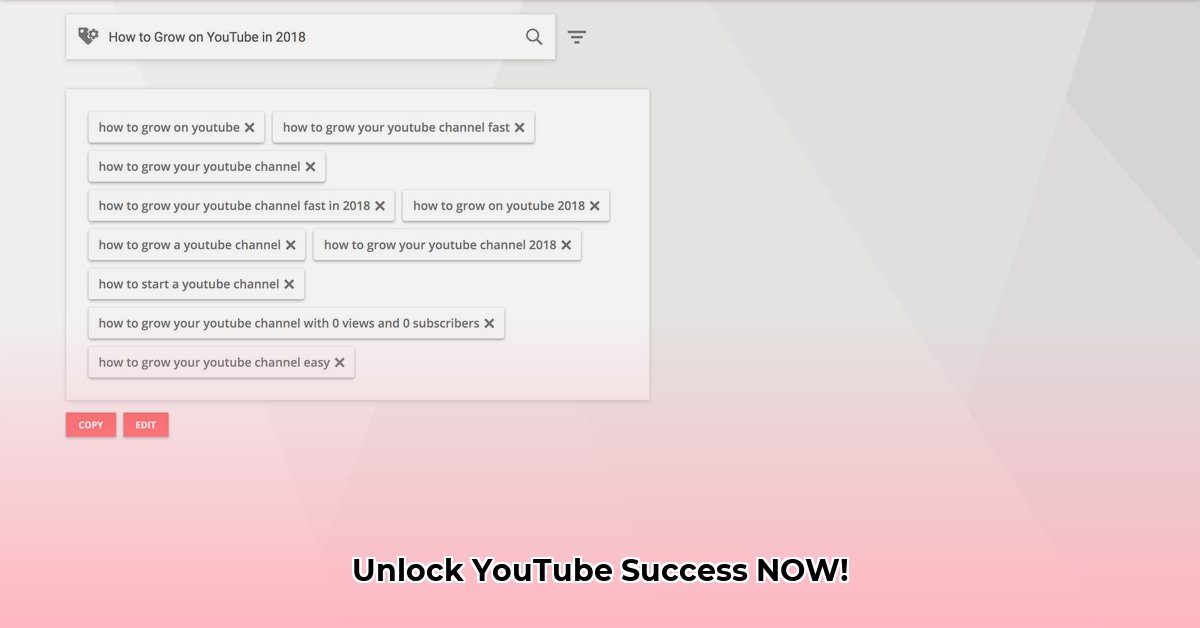
Want more YouTube views? This guide reveals how to leverage YouTube video tags (referred to here as "Ripid tags" for simplicity) to significantly increase your video's visibility. We'll cover keyword research, strategic tagging, advanced techniques, risk mitigation, and adapting to algorithm changes. Let's get started!
Ripid Tags: Your Secret Weapon for YouTube Discoverability
Ready to boost your YouTube channel? Ripid tags, or YouTube video tags, aren't magic, but they're a powerful tool for getting your videos discovered. They act as your video's introduction to YouTube's search algorithm, helping connect your content with the right audience. The more accurately your tags describe your video, the more likely it is to appear in relevant search results.
Understanding the Power of Video Tags: Beyond Simple Keywords
Video tags are more than just keyword stuffing. They're about precisely communicating your video's content to YouTube's algorithm. This algorithm constantly works to match videos with viewer searches, making accurate tags crucial for optimal performance.
Keyword Research: The Foundation of Effective YouTube Tagging
Before adding tags, you need to identify what people are searching for. Effective keyword research is your roadmap to YouTube success. What terms do viewers use to find videos like yours? What are your competitors using?
Tools like Google Keyword Planner can help identify popular search terms. However, focus on relevant keywords; quantity doesn't equal quality. Irrelevant keywords can harm your video's performance. For example, a video on "sourdough bread for beginners" should use specific long-tail keywords like "easy sourdough starter recipe" or "how to shape a sourdough boule," rather than just "baking." These long-tail keywords are often less competitive and attract a more engaged audience.
Strategic Tagging: A Step-by-Step Guide
This section provides a structured approach to effective video tagging:
Identify Core Keywords: Based on your research, select 3-5 primary keywords perfectly describing your video's topic. These form the core of your tag strategy.
Add Related Keywords: Expand your list with synonyms and long-tail keywords. This broadens your reach while maintaining relevance. Think of alternative ways viewers might search for your content.
Avoid Keyword Stuffing: Don't overload your tags with irrelevant keywords. YouTube's algorithm detects this, potentially penalizing your video. Prioritize clarity and relevance over sheer quantity.
Analyze and Adapt: Monitor your video's performance after uploading. Are you achieving your desired viewership? If not, experiment with different tags. Regularly adapt your strategy to algorithm changes.
Advanced Tagging Techniques: Mastering the Nuances
Ready to refine your approach? Consider these advanced strategies:
Competitor Analysis: Analyze successful videos in your niche. What tags are they using? Observe effective strategies but maintain your unique style.
Long-Tail Keywords: These highly specific phrases target smaller, focused audiences. They are generally less competitive, increasing your chances of ranking higher.
Brand Keywords: Include your brand name and relevant hashtags to boost visibility and build brand recognition.
Risk Assessment and Mitigation: Navigating the YouTube Landscape
While effective, video tags present potential risks:
| Risk | Mitigation Strategy |
|---|---|
| Algorithm Changes | Stay informed on YouTube algorithm updates and adapt your tags accordingly. |
| Keyword Stuffing Penalties | Use keywords naturally; prioritize relevance and avoid stuffing tags with irrelevant terms. |
| Inaccurate Keyword Data | Verify keyword data from multiple reliable sources; avoid relying solely on one tool. |
Remember, YouTube's algorithm is dynamic. Continuous monitoring and adaptation are key to long-term success.
Adapting to Algorithm Updates: A Dynamic Strategy
YouTube's algorithm is constantly evolving. Ignoring these changes can severely impact your video's visibility. To stay ahead, understand algorithm shifts and adapt your keyword strategy accordingly. Consistent monitoring and refinement are crucial.
Key Takeaways for Adapting Your Keyword Strategy:
- Relevant tags are crucial for YouTube search visibility.
- Maintain a balance between specific and broad keywords.
- Regularly monitor key metrics (watch time, click-through rate) to assess tag effectiveness.
- Adapt your tags to algorithm changes; regular updates are essential.
- Use 15-30 well-researched tags per video.
- Incorporate trending topics and seasonal keywords.
- Consider multilingual tags to expand your reach.
Mastering Ripid tags is crucial for YouTube success. Combine strategic tagging with high-quality content for optimal results. Start implementing these strategies today and watch your channel grow!
⭐⭐⭐⭐☆ (4.8)
Download via Link 1
Download via Link 2
Last updated: Wednesday, May 14, 2025